Blog · Filming
In doubles video, camera height decides everything
With four players moving, filming doubles the way you film singles shows only the net player's back. Where to put the camera to get the whole court, and what to look at when you review.
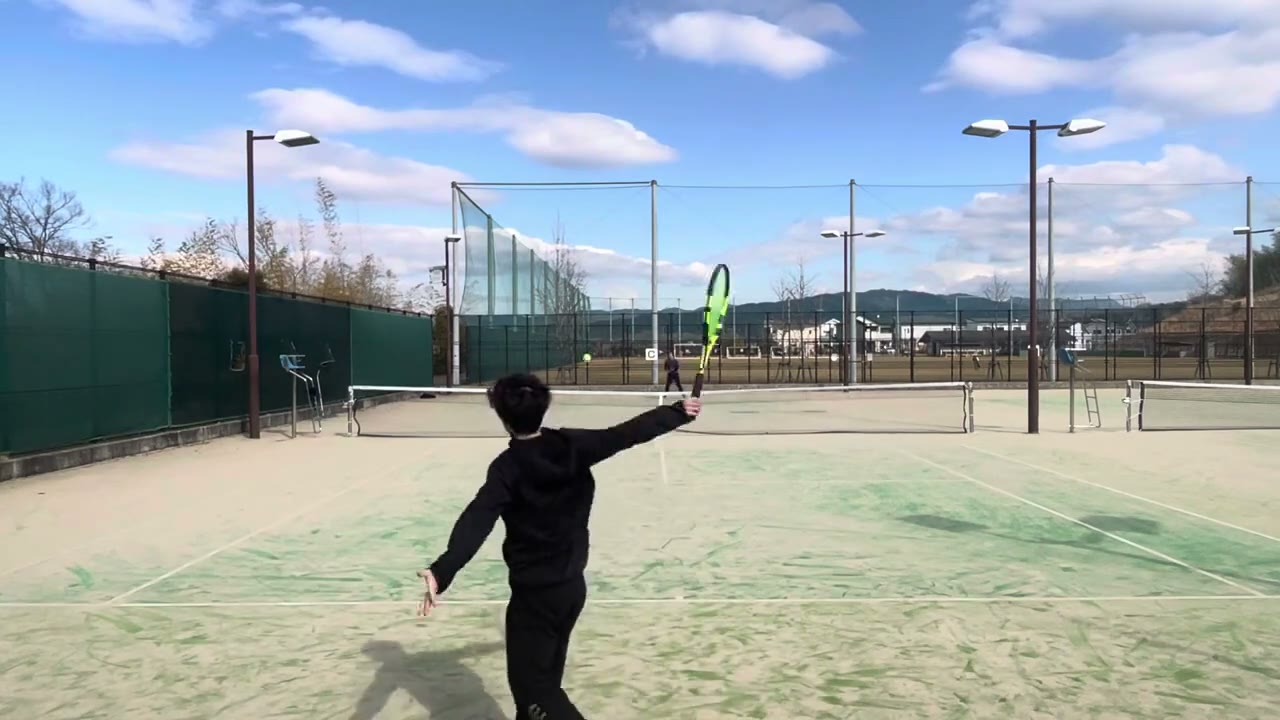
Junior team events and ordinary tournaments are as often doubles as singles, yet doubles videos get reviewed less than singles videos. The reason is simple: if you film them the same way, the important parts are not in the picture.
The basics of filming (sideways, high up, in the middle behind the court) are summarized briefly in "Filming tips" on the home page. Here I cover what changes for doubles.
The net player's back hides the far side
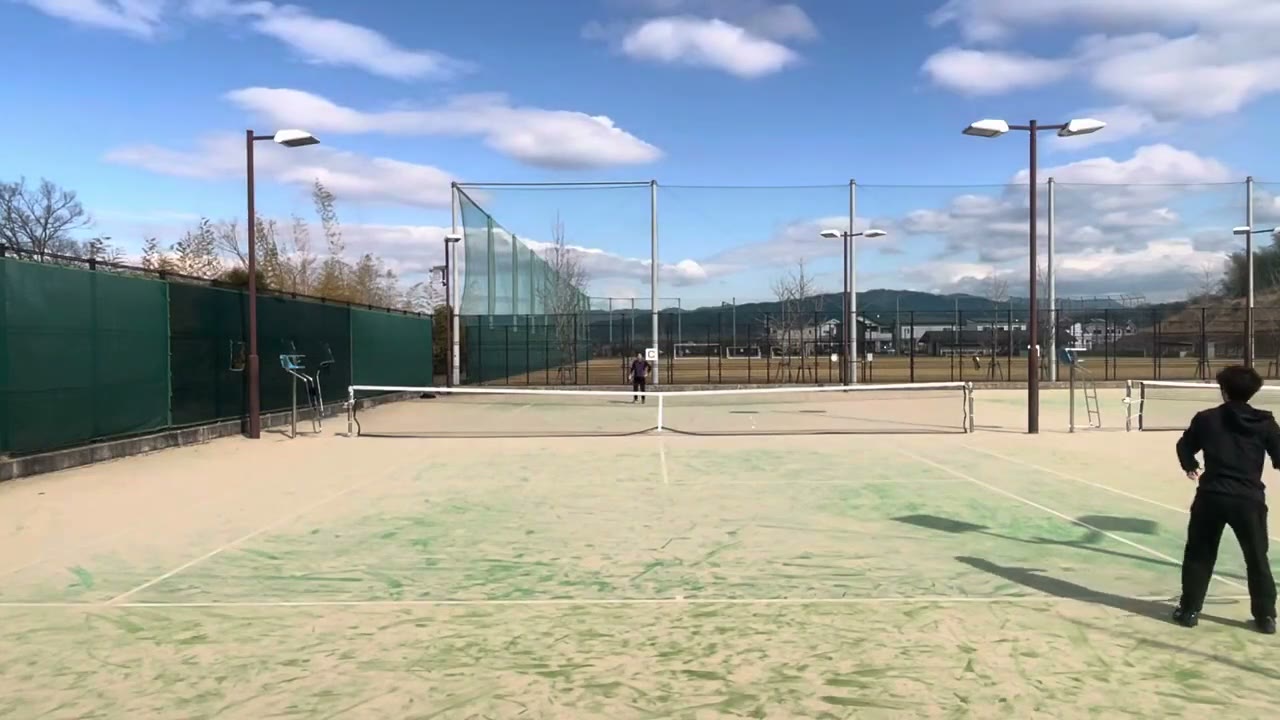
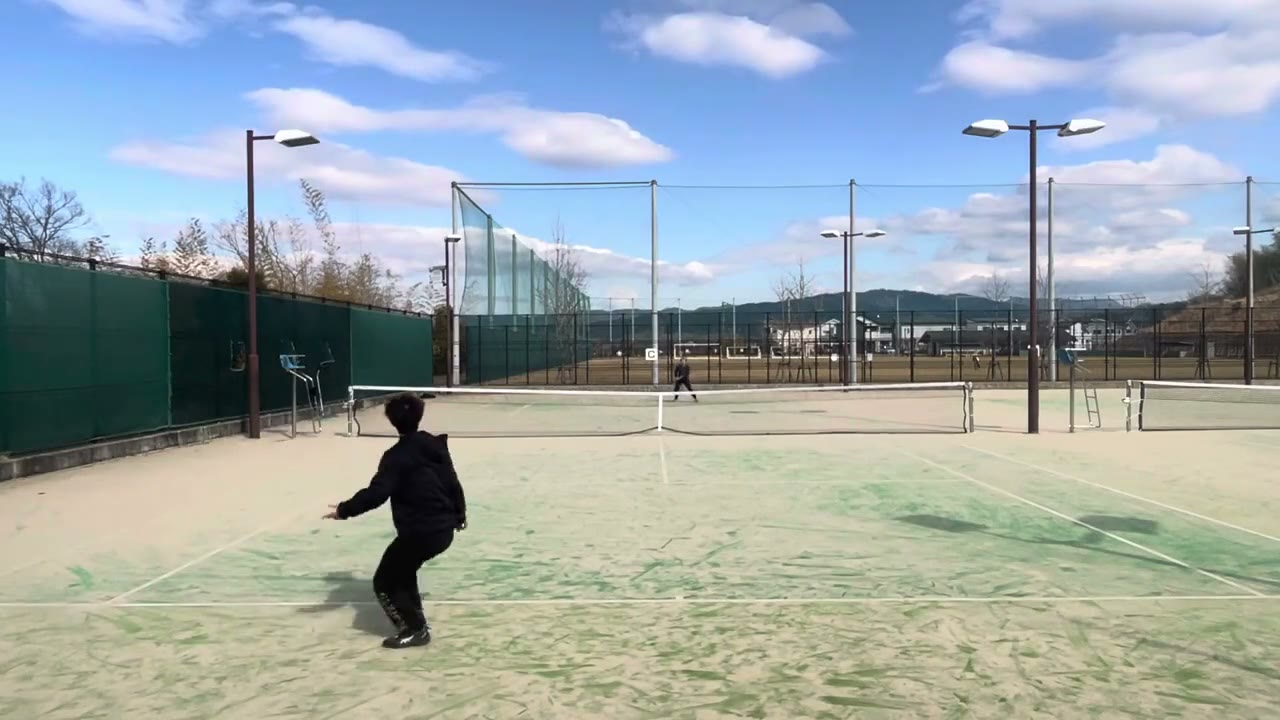
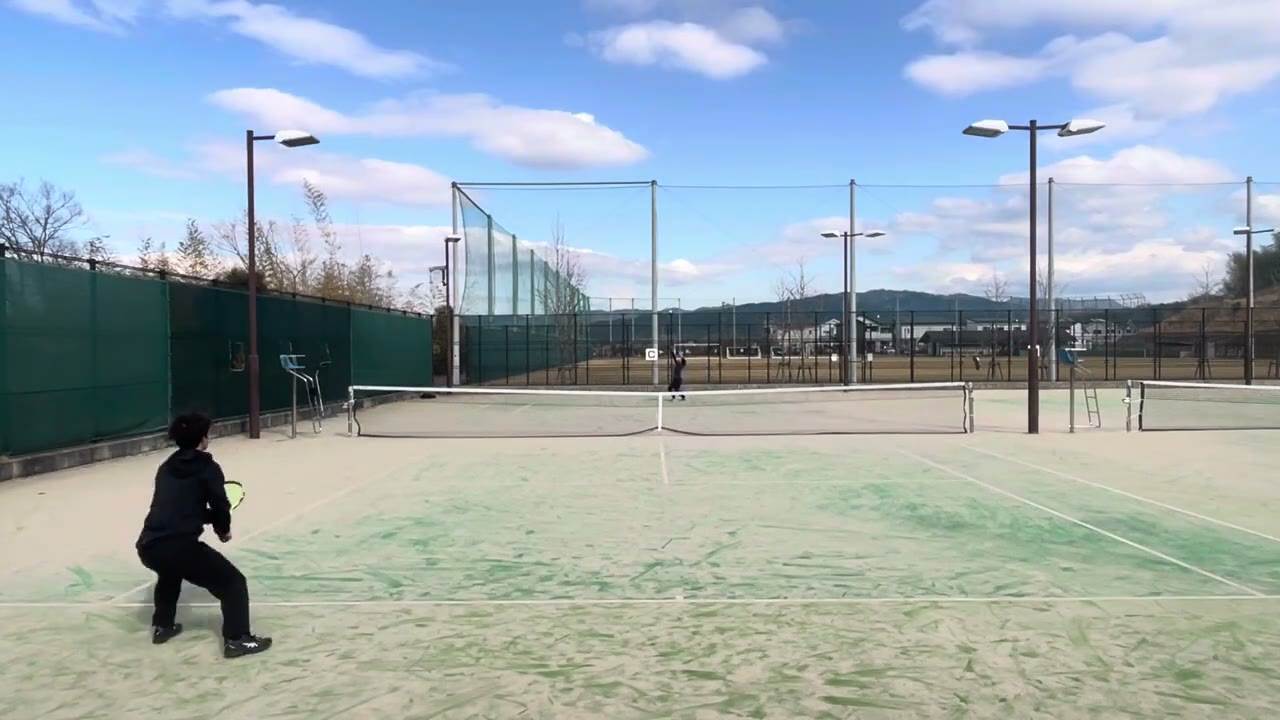
In doubles, the net player stands near the net on the near side. If you film from the same height as in singles, that player's back ends up in the middle of the frame and hides the bounces on the opponents' court and your partner's movement. So doubles needs height even more than singles. Go to the very top of the fence, or to the stands if there are any. If the only place you can reach is low, aim at the whole court from a rear corner at an angle, which is better than straight behind the baseline at a low height.
To fit the doubles sidelines, use a slightly wider angle than for singles, 0.5 to 0.7x. The ball gets smaller, but in doubles you are looking at positions rather than the ball, so that is fine.
When reviewing, watch the three who are not hitting
Doubles is about positioning and decisions more than technique. If you follow the ball when you review, you learn nothing. What you watch is the three players who are not hitting. When your partner hit, did you close in or drop back? How did the two of you move on the opponents' lob? How many times did you poach, and how many times did you not?
You check this by pausing one rally at a time, so you need a video cut down to just the rallies. With a video that includes the waiting time, every pause means fast-forwarding to the next rally, and your concentration breaks. In my data, doubles has shorter rallies and so more of them: 220 in one match, 1.5 times as many as singles. I am not going to cut that by hand.
Apps that follow the ball struggle in doubles
Many apps that report ball speed and placement are designed for singles, and with four players moving and the net player volleying, their detection can become unstable. For doubles, a rally-extraction app that only looks at "is play in progress or not" is steadier. Inplay is this kind. It finds rally sections from the players' movement, so the result does not change with the number of players.
Watch it with your partner
A doubles video only becomes meaningful when you watch it with your partner. "I wanted you to move up there" takes 10 seconds to get across while watching the video together. A file is often rejected for size, so if you can hand it over as a link, you just send the URL on LINE (the messaging app most people in Japan use) and the other person can watch the same rallies.