Blog · Reviewing
What parents do with the match videos they film
Hand it to the coach, watch it with your child, or watch it yourself. Many parents get as far as filming. What sets people apart is how they use it afterward.
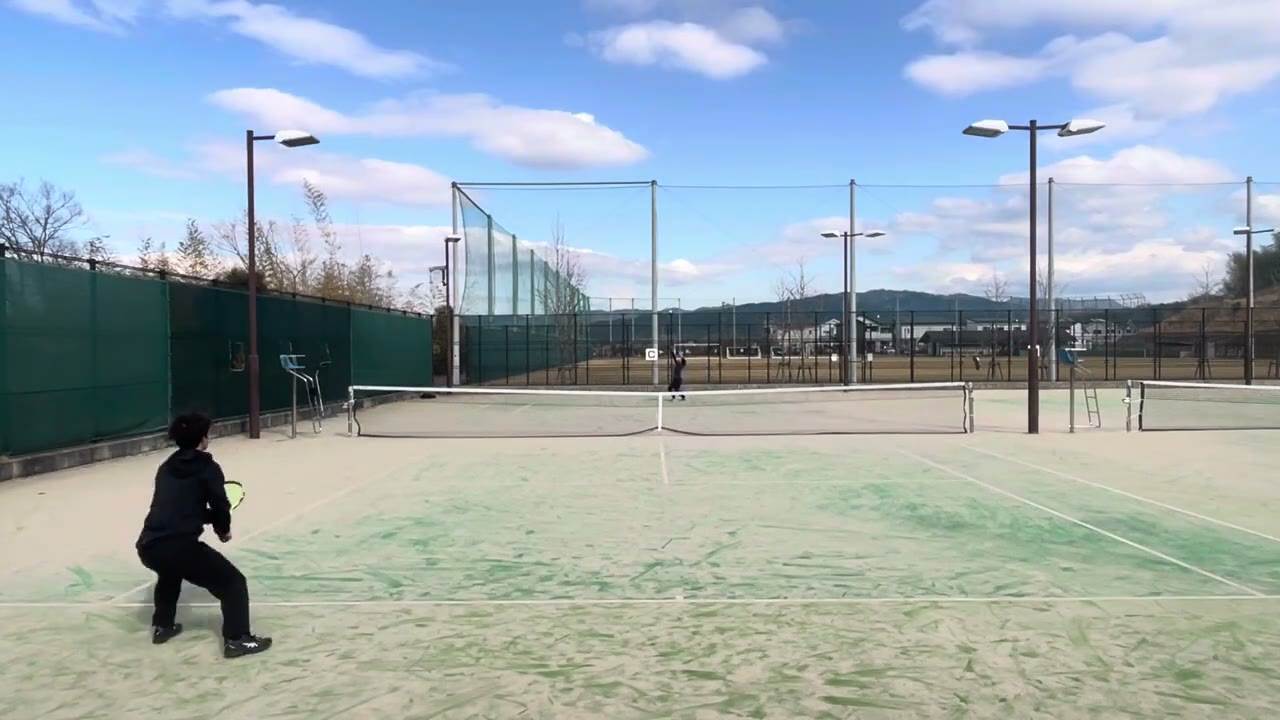
Parents holding a phone against the fence at tournament venues are no longer unusual. But ask them "what do you do with it after filming?" and the answer is usually "my child won't watch it" or "it's too long, so I don't watch it either." Filming is easy, and using the video is hard. Here are three ways to use it.
If you give it to the coach, shorten it and point to a scene
Coaches do not watch an hour of video. It is not that they lack time. They cannot tell where to look. If you hand it over, cut it to just the rallies, 15 to 20 minutes, and add a note about the scene, such as "please look at the two games from 3-3 in the second set." The reply then changes from "step in more" to "on that second serve in that game, use more spin and hit it deep."
A link is the easy way to hand it over. You just send the URL on LINE (the messaging app most people in Japan use), you do not run into file size limits, and the coach can open it on their phone and jump to the rally in question.
If you watch it with your child, don't explain
Almost every failure when watching together is the parent explaining. The moment you say "that was supposed to be crosscourt, right?", your child stops wanting to watch videos. What I do is ask just one question after each rally. "How did that point go?" "What were you aiming for on that serve?" "If you did it again, what would you change?" It is fine if there is no answer. The purpose is to make time for them to watch and put it into words themselves, and 10 rallies per session is enough.
If you watch it yourself, only count
When a parent tries to judge technique, opinions creep in. If you stick to counting, you get objective material. How many first serves went in out of how many you hit. How many points ended within 3 shots of the rally. How many points ended with your child's own error, and how many were won by the opponent. Line these three up over two or three matches and you start to see tendencies such as "on days when the first-serve percentage drops below 50%, they lose." What you give the coach is these numbers and the videos of the rallies they refer to.
For all three, shorten first
With all three, handling an hour of video as it is is unrealistic. In the matches I recorded, the time spent actually playing was 30% of the video. Extract just the rallies and it becomes 15 to 20 minutes, which makes "give it to the coach," "watch it with your child" and "count" all realistic. Inplay does the "just the rallies" part automatically and makes it possible to hand over as a link.